

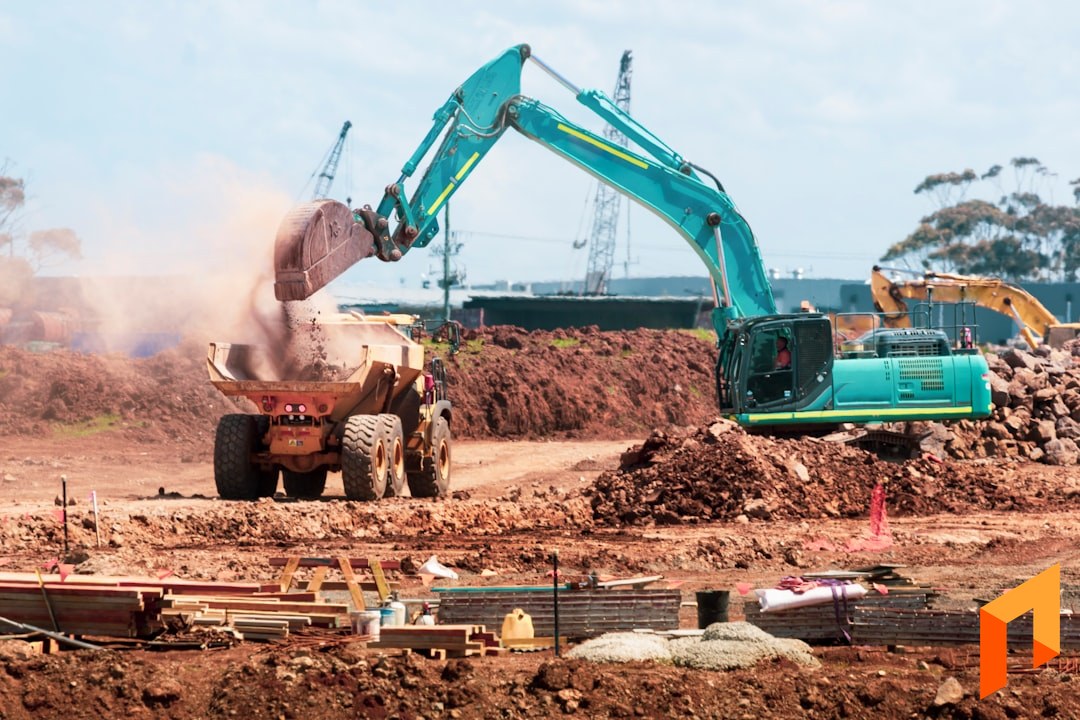
Excavation is a dirt-moving math problem before it's anything else. Every project starts with the same question: how many cubic yards are we cutting, how many are we filling, and where does the difference go? Get the cut/fill balance right and you price the job to make money. Get it wrong and you're eating haul-off, importing fill you didn't bid, or watching a thin margin disappear under a stalled machine.
That's why generic construction software so often frustrates excavation and site-work contractors. A tool built for custom homebuilders doesn't think in cubic yards of earthwork or read a grading plan. A CRM won't calculate a cut/fill balance. Plenty of excavation companies, from grading crews to utility and site-development outfits, still run the whole operation on takeoff software plus spreadsheets plus a lot of hard-won judgment.
Here's the honest truth up front: the earthwork takeoff tools are excellent at the volume math and terrible at running the rest of your business, and the general project platforms are the reverse. This guide walks through the tools excavation contractors actually use, what each is genuinely good at, and where each falls short, so you can build the stack that fits how you move dirt.
What Excavation Contractors Actually Need From Software
Before the picks, here's the checklist most excavation and earthwork companies are trying to cover. Almost no single tool nails all of these, which is exactly why so many contractors run two systems. Knowing which pieces matter most to you is the whole game.
- Earthwork takeoff and cut/fill volumes. The core of every excavation bid: comparing existing grade to proposed grade to calculate cut, fill, and net import or export in cubic yards. This is specialized surface-modeling math, and it's the slowest, highest-stakes part of quoting.
- Estimating. Turning those quantities into a priced bid: excavation, grading, hauling, import fill, utilities, and site restoration, against real machine, labor, trucking, and material costs.
- Scheduling. Sequencing crews and machines across projects and weather windows, so you know which excavator is where and what's booked next.
- Equipment and crew job costing. Knowing what a project actually cost, including machine hours, fuel, operator labor, and trucking, versus what you bid. On equipment-heavy work, idle iron and unbilled hauling are where margin leaks.
- Invoicing and QuickBooks. Progress billing, deposits, and payments with a clean two-way sync to QuickBooks so your books aren't a second full-time job.
Now the picks, organized by what each tool is best for.
Note
The short version: For pure earthwork math, dedicated cut/fill takeoff tools like AGTEK, InSite SiteWork, and Kubla Cubes calculate volumes from grading plans better than anything else, and that's all they do. To actually run excavation projects end to end, look hard at Foreman: estimating, proposals, scheduling, equipment job costing, and two-way QuickBooks in one place at a flat, predictable price. Buildertrend and JobTread are strong general project platforms, and Contractor Foreman is the budget-tier option. Many excavation contractors pair a takeoff tool with a run-the-business platform, and that combination is a completely valid stack.
Best Excavation Software Compared
| Tool | Best for | Earthwork takeoff | Runs the whole business | Pricing shape |
|---|---|---|---|---|
| AGTEK | High-volume, complex earthwork takeoff | Yes, industry standard | No | Premium, quote-based |
| InSite SiteWork | Detailed cut/fill takeoff | Yes | No | One-time license tier |
| Kubla Cubes | Simpler, lower-cost volume takeoff | Yes, entry-level | No | Lower-cost license |
| Foreman | Running excavation projects end to end | AI plan takeoffs on Enterprise (not survey-grade earthwork) | Yes | Flat $199.99/mo annual + $20/seat |
| Buildertrend | Larger, general-construction-style projects | No | Yes | Higher-end tiers |
| JobTread | General PM with strong estimating | No | Yes | Flatter per-user pricing |
| Contractor Foreman | Budget-conscious buyers | No | Partial, tiered | Low, tiered |
Dedicated Earthwork Takeoff Tools: Best for Cut/Fill Volume Math
The earthwork takeoff tools are the specialists, and for the volume math they're unmatched. If your bids stand or fall on an accurate cut/fill balance, these are the tools built for exactly that one job.
AGTEK: The Industry Standard for Complex Earthwork
AGTEK is the name most established excavation and grading contractors know. It builds surface models from plans, calculates cut and fill by area and phase, and handles complex, multi-surface earthwork that simpler tools choke on. For high-volume site-development and grading work, it's the benchmark.
Trade-offs. It's premium software with premium, quote-based pricing and a real learning curve, and it's a takeoff engine, not a business platform. It won't schedule your machines, cost a project against the bid, or invoice a client.
InSite SiteWork: Detailed Takeoff at a License Tier
InSite SiteWork is a well-regarded earthwork takeoff package that digitizes plans and calculates cut/fill volumes, strata, and material quantities in detail. It's a common choice for contractors who want serious takeoff depth without AGTEK's price ceiling.
Trade-offs. Same category limit: it does takeoff, and only takeoff. Everything downstream of the number still lives in another system.
Kubla Cubes: Simpler, Lower-Cost Volume Takeoff
Kubla Cubes is the entry-level pick, a lower-cost tool for calculating cut/fill and volume takeoffs on straightforward projects. For a smaller excavation outfit that wants real volume math without a heavy license, it's an approachable starting point.
Trade-offs. It trades depth for simplicity, so the most complex multi-surface projects may push its limits, and like the others it doesn't run the rest of your business.
Best for all three: the earthwork volume calculation itself. Pick the one that matches your project complexity and budget, then pair it with a platform that handles estimating-to-invoice. If your plans arrive as PDFs and you also want faster measurement inside your bidding tool, our takeoffs feature page shows how Foreman's AI reads a plan to populate quantities.
Foreman: Best for Running Excavation Projects End to End
If your excavation business runs on projects, you scope the work, price the quantities, schedule the crew and iron, and bill against the job, Foreman is built to run the whole thing in one place at a predictable price.
The honest pitch: Foreman is an all-in-one project platform, not a survey-grade earthwork engine. If cut/fill modeling from a topo is your whole world, a dedicated takeoff tool does that one thing better. But if you're tired of stitching a takeoff number into a spreadsheet estimate, a separate scheduling board, and QuickBooks, this is where an all-in-one earns its keep, and it's the piece the takeoff tools leave you to solve yourself.
AI Plan Takeoffs
Upload a site plan or drawing and Foreman's AI reads it, identifying dimensions and measurable areas to help populate your estimate with real quantities instead of guesses. It isn't a replacement for survey-grade cut/fill modeling on complex grading, but for measuring site areas, utility runs, and scope quantities off a plan, it cuts the slowest part of quoting down to minutes. See how it works on our takeoffs feature page.
Estimating and Budgets
Foreman's estimating is section-based, so you scope an excavation project the way you actually bid it: mobilization, clearing and grubbing, cut and fill, hauling and export, import fill, utilities and underground, compaction, and site restoration. Each section carries its own line items, quantities, unit costs, and markup, so you can price cubic yards, machine hours, and trucking against real costs.
And the estimate doubles as your project budget. As the work runs, you track estimated versus actual cost, which is exactly how you protect margin on equipment-heavy jobs. More on how that works on our budget feature page.
One-Click Proposals
Build the estimate, then generate a clean, branded proposal from it with one click, no re-keying numbers into a separate document. The customer or GC gets a professional proposal they can approve online, and when they do, the numbers are already in your system.
Scheduling and Crews
Foreman includes scheduling so you can see which crew and which machine are on which project and what's booked next, the everyday coordination problem for an excavation company juggling weather windows, hauling, and equipment moves across multiple projects in a week.
Equipment Job Costing and Two-Way QuickBooks
Invoice against the project, collect payments online, and sync it all to QuickBooks with a genuine two-way connection so your books aren't a second job. Job costing rolls actual machine hours, operator labor, fuel, and trucking back against the estimate, so you know which projects made money and which got buried by idle iron and unbilled haul-off. This is the piece spreadsheets and takeoff tools leave you to solve yourself.
Flat, Predictable Pricing
Here's where Foreman is deliberately different from most of this list: pricing is flat and clients and subs are free. $199.99/month billed annually, plus $20 per seat, covering estimating, proposals, scheduling, job costing, plan measuring, and QuickBooks sync, all in the base price. Clients and subcontractors never cost a seat, and your price never scales with your revenue. For an excavation company that wants one system and a bill it can predict, that's the appeal.
Best for: excavation contractors of any size doing project-based work who want full estimating, project management, and financials in one tool.
Run your excavation projects, estimate to invoice, in one place.
Book a demoBuildertrend: Best for Larger, General-Construction-Style Projects
Buildertrend is a mature, full-featured construction management platform aimed primarily at homebuilders and remodelers. Some excavation and site-work contractors, especially those doing larger commercial or general-construction-style work, use it as their project backbone.
Strengths. Deep scheduling, client communication, document management, budgets, and change-order handling. It's a well-established platform with a broad feature set and a long track record, and it handles complex, multi-phase projects well.
Trade-offs. It's built and priced for larger residential builders, and it isn't shaped around excavation's realities. You won't find cut/fill earthwork takeoff or equipment-hour costing out of the box. It can feel like more platform than a focused excavation operation needs, and pricing sits at the higher end. See our deeper Buildertrend comparison for how it stacks up.
Best for: excavation companies running larger, general-construction-style projects who want a broad, established PM platform.
JobTread: Best General PM With Strong Estimating
JobTread is a newer, well-regarded construction management platform known for strong estimating and cost tracking, plus flatter pricing that appeals to contractors tired of per-seat surprises.
Strengths. Genuinely good estimating and cost management, a clean interface, and pricing that's more transparent than most legacy platforms. For an excavation contractor doing broad site work who wants solid numbers and organized project tracking, it's a credible choice.
Trade-offs. It's built for general construction workflows rather than earthwork-specific ones. There's no cut/fill takeoff for grading plans, and you'll set it up to match how you bid dirt. It's a strong general platform, not a purpose-built excavation tool. Our JobTread comparison goes deeper on the differences.
Best for: excavation contractors who want a general PM platform with strong estimating and flatter pricing.
Contractor Foreman: Best Budget Option
Contractor Foreman is a low-cost, tiered construction management tool that packs a lot of modules into a cheap monthly price. If cost is the single deciding factor, it earns a look.
Strengths. Inexpensive entry point, a wide breadth of features (estimating, scheduling, invoicing, and more) bundled together, and tiered plans so you can start small.
Trade-offs. The interface feels dated compared to newer platforms, and the breadth-over-depth approach means individual modules can feel shallow. There's no earthwork takeoff, and the tiered pricing means the features you want may sit in a higher plan than the one you signed up for, so read the tiers carefully. It's a value play, not a polish play.
Best for: excavation contractors whose primary constraint is budget and who'll trade a dated experience for a low monthly cost.
A Word on the Two-Tool Stack
It's worth saying plainly: many excavation contractors run two systems on purpose, and that's fine. A dedicated earthwork takeoff tool for the cut/fill math, and a run-the-business platform for estimating, scheduling, job costing, and invoicing. The takeoff tool produces the quantities; the platform turns them into a priced bid, a schedule, and a paid invoice.
The mistake isn't running two tools. It's running two tools that don't connect, so the cut/fill number gets hand-keyed into a spreadsheet, the spreadsheet gets hand-keyed into an invoice, and QuickBooks gets updated a third time by hand. Every re-key is a chance to fat-finger a yardage or drop a haul-off line, and on equipment-heavy work those errors are expensive.
The goal is to shrink the gap. Let the takeoff tool own the volume math, then land those quantities in a platform that carries them all the way to the invoice and the books without re-typing. That's the difference between two tools that fight each other and two tools that hand off cleanly.
How to Choose the Right Excavation Software
There's no universal "best." There's the best fit for how your excavation business actually makes money. Use this as a quick decision guide:
- Need serious, survey-grade cut/fill takeoff on complex grading? A dedicated earthwork tool: AGTEK for the most complex work, InSite SiteWork for detailed takeoff at a license tier, Kubla Cubes for simpler, lower-cost volume math.
- Want estimating, takeoffs, scheduling, equipment job costing, and QuickBooks in one flat-priced system? Foreman.
- Running larger, general-construction-style projects and want a broad, established platform? Buildertrend.
- Want a general PM tool with strong estimating and flatter pricing? JobTread.
- Buying primarily on price? Contractor Foreman.
The most common mistake is buying the tool with the flashiest demo instead of the one that matches your workflow. An excavation contractor who buys a generic homebuilder platform will fight its assumptions every day, and one who buys a takeoff-only tool will still be stitching together scheduling, job costing, and invoicing by hand. Be honest about your mix of work: if takeoff is your whole business, buy the best takeoff tool; if you need to run projects end to end, buy the platform that does that and pair it with takeoff as needed.
Frequently Asked Questions
What is the best software for excavation cut and fill takeoff?
For dedicated cut/fill earthwork takeoff, AGTEK is the industry standard for complex, high-volume grading work, InSite SiteWork offers detailed takeoff at a license tier, and Kubla Cubes is a lower-cost entry point for simpler volume math. These tools build surface models from grading plans and calculate cut, fill, and net import or export in cubic yards. They excel at the volume math but don't run the rest of your business.
What is the best all-in-one software for running an excavation business?
Foreman is built to run excavation projects end to end: section-based estimating, one-click proposals, scheduling for crews and equipment, job costing that rolls machine hours and trucking back against the bid, and two-way QuickBooks sync, all at a flat $199.99 per month billed annually plus $20 per seat. It handles everything downstream of the takeoff number that dedicated earthwork tools leave you to solve in spreadsheets.
Do I need dedicated earthwork takeoff software and a project platform?
Many excavation contractors run both, and it's a valid stack. A dedicated tool like AGTEK or InSite owns the cut/fill volume math, while a platform like Foreman turns those quantities into a priced estimate, a schedule, job costing, and an invoice that syncs to QuickBooks. The key is choosing a platform that lets you land quantities without re-keying, so the two tools hand off cleanly instead of fighting each other.
How much does excavation software cost?
It varies widely by category. Dedicated earthwork takeoff tools range from lower-cost licenses (Kubla Cubes) to premium quote-based pricing (AGTEK). General project platforms differ too: Foreman is a flat $199.99 per month billed annually plus $20 per seat with clients and subs free, Buildertrend sits at the higher end with tiered plans, JobTread uses flatter per-user pricing, and Contractor Foreman is a low-cost tiered option. Always confirm current pricing directly with each vendor.
Can excavation software connect to QuickBooks?
Yes. Foreman offers a genuine two-way QuickBooks sync so invoices, payments, and job costs flow between the platform and your books without double entry. This matters for equipment-heavy excavation work, where machine hours, fuel, operator labor, and trucking all need to reconcile against the estimate. Dedicated earthwork takeoff tools generally don't sync to QuickBooks, since they focus only on volume calculations, which is one reason many contractors pair a takeoff tool with a full project platform.
Does Foreman replace my earthwork takeoff tool?
Not for survey-grade cut/fill modeling on complex grading. Foreman's AI plan takeoffs read a site plan to help populate quantities and speed up measurement, but a dedicated earthwork engine still does the deepest surface modeling better. Foreman's role is everything after the quantity: estimating, proposals, scheduling, equipment job costing, and invoicing in one place. Most excavation contractors keep their takeoff tool for the volume math and use Foreman to run the projects.
Whatever you pick, the goal is the same: accurate quantities, fewer tools, less re-keying, and clean numbers on every project. For project-based excavation contractors, that's exactly the problem Foreman was built to solve, — book a demo to see it on your projects.
Estimate, schedule, and bill your excavation projects in one place.
Book a demo

