

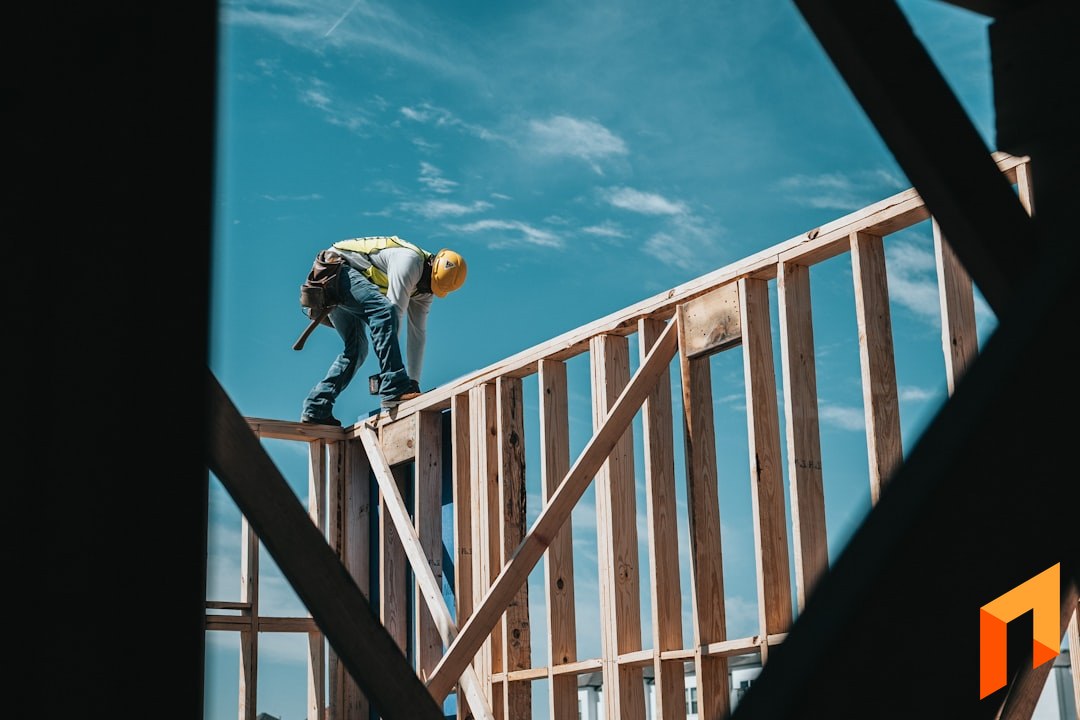
You know how to build. That's the hard part, and you already have it. What separates a skilled tradesperson from a construction business owner is everything around the work: licensing, insurance, pricing that actually turns a profit, and a steady way to land the next project before the current one finishes.
This guide walks the whole path, from writing a plan to running your first projects like a professional. No fluff, no theory you can't use on Monday.
Note
TL;DR: To start a construction business, pick a niche, write a lean business plan, register an LLC, get licensed and insured (general liability plus workers' comp), line up startup cash, and set your pricing with real markup. Then land your first projects through referrals and local networking, and run every project on a clear estimate, a signed proposal, and staged invoices.
What are the first steps to starting a construction company?
The first steps are choosing your niche, forming a legal entity, and getting licensed and insured before you take on paid work. Everything else builds on those three. Skipping them to chase a quick project is how new contractors end up personally liable for a claim or fined for unlicensed work.
Here is the sequence most successful contractors follow:
- Pick a specialty and a target customer.
- Write a short business plan.
- Register the business (usually an LLC).
- Get your contractor license.
- Buy insurance and, if needed, a surety bond.
- Set up banking, bookkeeping, and pricing.
- Land your first projects and deliver them professionally.
Work them in order. Each step unlocks the next.
Step 1: Choose your niche and target customer
Pick one thing to be known for before you try to be everything. A defined niche makes marketing cheaper, referrals clearer, and pricing easier because you build the same kind of project repeatedly and learn what it truly costs.
Common construction niches include:
- Residential remodeling (kitchens, bathrooms, additions)
- New home building (custom or spec)
- Specialty trades (concrete, framing, roofing, electrical, plumbing)
- Light commercial (tenant improvements, small retail, offices)
- Service and repair (handyman-plus, punch lists, warranty work)
You do not have to stay small. Plenty of companies start with bathroom remodels and grow into full custom homes and commercial work. But start focused. A contractor who does "everything" competes on price against everyone. A contractor known for gut-renovation kitchens gets referred by name.
Step 2: Write a construction business plan
A construction business plan is a short document that defines what you build, who you build it for, what it costs to operate, and how you will win projects. It does not need to be 40 pages. A working plan for a new contractor fits on a few pages and answers real questions you will face in month one.
Cover these sections:
- Services and niche: what you build and for whom.
- Market: who your customers are and who you compete with locally.
- Pricing model: your target markup and how you will estimate.
- Operations: crew vs. subs, equipment, software, and workflow.
- Financial plan: startup costs, a cash cushion, and a break-even revenue target.
- Growth: how you will get from your first project to a steady pipeline.
The financial section matters most. Write down what you need to earn each month to cover overhead and pay yourself, then work backward to how many projects that requires. If you do not know your numbers, you are guessing, and guessing is how contractors go broke while staying busy.
Step 3: Register your business (LLC and structure)
Most new contractors form an LLC because it separates your personal assets from business liability, which is a real risk in construction. A sole proprietorship is simpler and cheaper to start, but you are personally on the hook if something goes wrong on a project. Given the liability in this trade, the LLC is usually worth it.
Your basic legal setup:
- Choose a structure: LLC is the common default; some larger operations elect S-corp taxation later.
- Register with your state and file the LLC paperwork.
- Get an EIN from the IRS (free) for taxes and banking.
- Open a business bank account so personal and business money never mix.
- Register for state and local taxes as required where you operate.
Rules and fees vary by state, so confirm the specifics with your Secretary of State's office or a local accountant. This is one place where an hour with a professional saves you headaches later. The U.S. Small Business Administration has a solid free walkthrough of business registration basics.
Step 4: Get licensed
Most states require a contractor license to bid or perform construction work above a certain dollar threshold, and running projects without one can mean fines, unpaid invoices you cannot legally collect, and shutdowns. Licensing rules are set at the state (and sometimes city or county) level, so requirements differ widely.
Licensing usually involves some mix of:
- Proof of experience in the trade
- A trade exam and a business/law exam
- A license bond and proof of insurance
- An application fee
The threshold that triggers a license requirement, the exams, and the classifications all depend on where you work. We cover the full process, state differences, and how to prepare, in our guide on how to get a contractor license. Read that before you bid your first project, because in most states an unlicensed contract is one a client can legally refuse to pay.
Note
When you're ready to land and run projects, Foreman handles estimates, proposals clients sign online, invoicing, and QuickBooks sync — a 30-day free trial that starts after a demo. Book a demo.
Step 5: Get insurance and bonding
Insurance protects your business from the accidents, damage, and injuries that are simply part of construction. At minimum, most contractors carry general liability and, once they have employees, workers' compensation. Many clients and general contractors will not let you on site without proof of both.
The core coverage to understand:
- General liability: covers property damage and injuries to others caused by your work. This is the baseline policy almost every contractor needs.
- Workers' compensation: covers your employees' medical costs and lost wages if they get hurt. Required in most states once you have employees.
- Commercial auto: covers vehicles used for the business.
- Tools and equipment (inland marine): covers your gear on the job and in transit.
- Builder's risk: covers a structure under construction, often required on larger projects.
Surety bonds are different from insurance. A bond guarantees you will complete work and follow the rules; if you do not, the client can claim against it. Many states require a license bond, and larger or public projects may require performance and payment bonds. Get quotes from an agent who works with contractors specifically, because they will size your coverage to your actual trade and project types.
What does it cost to start a construction business?
Startup costs vary widely based on your trade, whether you buy or rent equipment, and how much you subcontract. A solo remodeler using subs and rented tools starts far leaner than a company buying trucks and heavy equipment. Rather than a single number, budget by category.
Plan for these startup costs:
- Legal and licensing: LLC filing, license application, exam fees, and bond premium.
- Insurance: first premiums for general liability and, if you hire, workers' comp.
- Tools and equipment: buy the essentials, rent the occasional heavy gear.
- Vehicle: a reliable work truck or van.
- Software and admin: estimating and project management tools, bookkeeping, a phone, and a simple website.
- Working capital: the single most overlooked cost. You often pay for materials and labor before a client pays you.
That last one sinks new contractors more than any other. You can be profitable on paper and still run out of cash because you funded a project's materials weeks before the first payment arrived. Keep a cushion, and structure your payments so you are not financing the client's project out of your own pocket (more on that below).
Step 6: Set up tools, software, and a workflow
Decide early how you will estimate, bill, and keep projects organized, because ad-hoc spreadsheets and text-message updates break down the moment you run more than one project at a time. The contractors who look professional to clients are usually the ones with a repeatable system behind them, not just better job-site skills.
At a minimum you need a way to:
- Build estimates quickly and consistently
- Send proposals clients can review and sign
- Invoice and track what you are owed
- Keep photos, plans, and change orders in one place per project
- Sync your numbers to accounting so tax time is not a scramble
You can stitch this together from spreadsheets, PDFs, and a separate accounting app, and many contractors start there. The trouble is that the pieces do not talk to each other, so you re-key the same numbers three times and things slip through the cracks. A dedicated construction platform keeps the estimate, proposal, invoice, and budget connected. Foreman's project budget tool links your estimate to every proposal and invoice so your numbers stay consistent from bid to final payment.
How do you price construction projects to actually make money?
You price by starting from your true costs, then adding markup to cover overhead and profit, not by copying a competitor's number or guessing a "fair" price. Underpricing is the most common reason skilled contractors fail. They stay busy, do great work, and still cannot pay themselves, because their prices never covered the real cost of running the business.
Two terms you must not confuse:
- Markup is the amount you add on top of your costs.
- Margin is the profit as a percentage of the final price.
They are related but not the same, and mixing them up leaves money on the table on every project. A 20% markup is not a 20% margin. We break the math down, with the numbers most contractors should target, in our construction markup and pricing guide.
The workflow that keeps you profitable:
- Estimate the real cost of labor, materials, subs, and equipment, including a waste factor and allowances.
- Add markup to cover overhead (insurance, truck, software, your time in the office) and leave a profit.
- Bid and present the number as a clean proposal, not a raw cost breakdown.
- Track actuals against the estimate so you learn where you win and lose money.
If bidding is where you feel least confident, start with our walkthrough on how to bid a construction job. Getting the bid right is the difference between a project that funds your business and one that quietly drains it.
Step 7: Land your first projects
Your first projects almost always come from people who already trust you: past employers, tradespeople you have worked alongside, friends, family, and their networks. Marketing to strangers is slow and expensive at the start. Referrals and local relationships are how most contractors fill their first year.
Where new contractors find early work:
- Your network: tell everyone you know exactly what you build and who you help.
- Other contractors: GCs and specialty trades who need a reliable sub in your niche.
- Local presence: a Google Business Profile, a simple website, and a few review platforms.
- Home-service marketplaces: lead sites can prime the pump, though the leads cost money and competition is fierce.
- Job-site signs and truck branding: cheap, local, and steady over time.
Then turn every finished project into the next one. Ask for a review while the client is happy, ask if they know anyone else planning work, and stay in touch. A contractor who delivers cleanly and asks for the referral will outgrow one who is simply better with tools but silent afterward.
How to run projects like a professional
Running a project professionally means the client always knows the scope, the price, the schedule, and what changed, in writing. Most disputes in construction are not about workmanship. They are about a client and a contractor who remembered a conversation differently. Documentation is what protects your margin and your reputation.
The professional baseline for every project:
- A written scope and signed proposal before work starts.
- Change orders in writing for anything added or altered, priced and approved before you build it.
- Staged invoicing (a deposit, progress payments, and a final payment) so you are never far out of pocket.
- A daily or weekly log with photos, so you have a record if a question comes up later.
- One place per project where the client can find documents, updates, and the current budget.
This is also where good software earns its keep. When the estimate, proposal, change orders, and invoices all live in one connected system, you spend less time on paperwork and more time building, and the client experiences a business that has its act together.
Frequently asked questions
How much money do I need to start a construction business?
It depends heavily on your trade and whether you buy or rent equipment. A solo remodeler who subcontracts and rents tools starts far leaner than a company buying trucks and heavy machinery. Budget by category: legal and licensing, first insurance premiums, essential tools, a work vehicle, software, and, most importantly, working capital to cover materials and labor before clients pay you. That cash cushion is the cost most new contractors underestimate.
Do I need a license to start a construction business?
In most states, yes, once your projects exceed a certain dollar threshold. Licensing is set at the state and sometimes local level, so requirements vary. Working unlicensed where a license is required can mean fines and contracts a client can legally refuse to pay. Confirm your state's rules and see our contractor license guide before bidding your first project.
Should I form an LLC or a sole proprietorship?
Most contractors choose an LLC because it separates personal assets from business liability, which is a genuine risk in construction. A sole proprietorship is cheaper and simpler to start, but leaves you personally liable if a project goes wrong. Given the liability in the trade, the LLC is usually worth the modest filing cost. Confirm the specifics with a local accountant or your Secretary of State.
What insurance does a construction business need?
At a minimum, general liability, which covers property damage and injuries your work causes to others. Once you have employees, most states require workers' compensation. Depending on your work you may also need commercial auto, tools and equipment coverage, and builder's risk on larger projects. Many clients and general contractors require proof of insurance before you can set foot on their site.
How do I get my first construction clients?
Start with people who already trust you: former employers, tradespeople you have worked with, friends, family, and their networks. Set up a Google Business Profile and a simple website, and consider home-service lead marketplaces to prime the pump. Then convert every finished project into the next by asking for a review and a referral while the client is happy.
How do I make sure a construction project is profitable?
Price from your true costs, then add markup that covers overhead and leaves a profit, and track your actual costs against the estimate on every project. Underpricing is the top reason skilled contractors fail. Use staged invoicing so you are not financing the client's project, and put every change in writing so added work gets paid. See our markup and pricing guide for the target numbers.
The takeaway
Starting a construction business is a sequence, not a leap: niche, plan, entity, license, insurance, pricing, and projects. Get the foundation right and you build a company that pays you well for years, not just a busy calendar that never turns into profit.
Note
When you're ready to land and run projects, Foreman handles estimates, proposals clients sign online, invoicing, and QuickBooks sync — a 30-day free trial that starts after a demo. Book a demo.


