

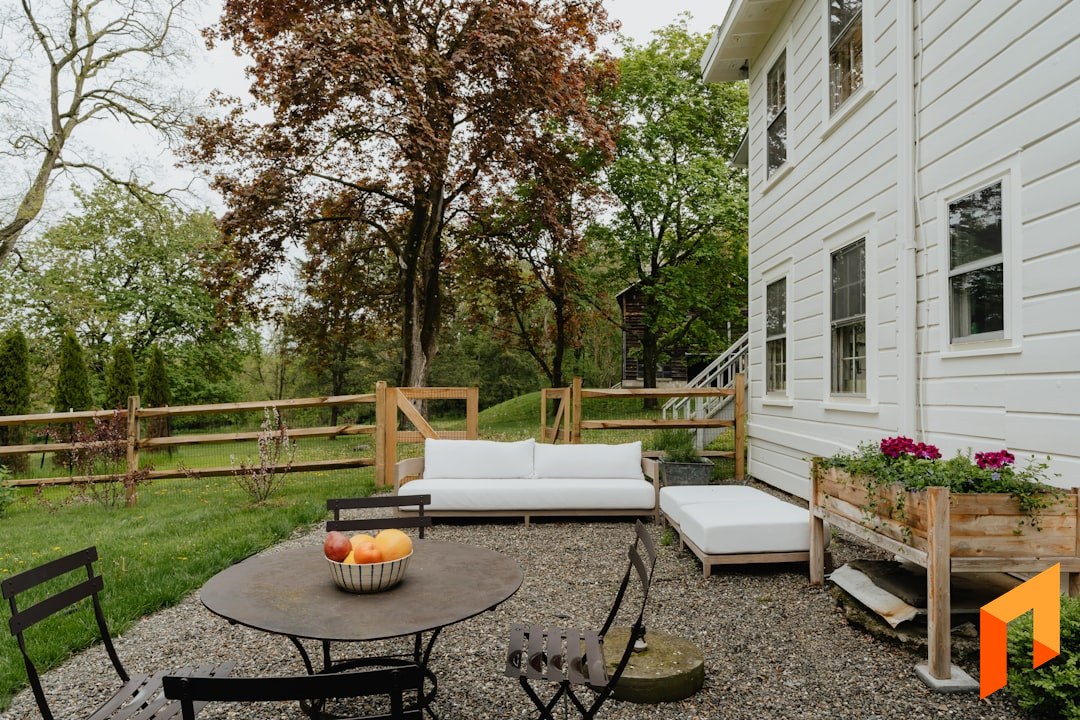
Landscaping is really two businesses wearing one uniform. One side installs: patios, retaining walls, outdoor kitchens, plantings, full design-build projects that run for weeks. The other side maintains: mowing routes, seasonal cleanups, snow, recurring visits that repeat every seven days. The best landscaping software for one side is often the wrong fit for the other.
That split is why "best landscaping software" has no single answer. A tool built for high-volume maintenance routing will feel thin the moment you try to estimate a $90,000 hardscape build. A tool built for design-build projects will feel like overkill if all you do is dispatch mowing crews. So this roundup organizes picks by what you actually do, and it is honest about where each tool wins and where it does not.
What Landscaping Companies Actually Need From Software
The right landscaping software depends on your mix of design-build projects versus recurring maintenance. Install-heavy companies need estimating, takeoffs, proposals, and job costing. Maintenance-heavy companies need scheduling, crew routing, and fast recurring invoicing. Most companies do both, so the real question is which side is your core revenue.
Here is the short list of what green-industry operators evaluate:
- Estimating and takeoffs. Pulling quantities off a site plan: square footage of pavers, linear feet of edging, plant counts, cubic yards of soil or mulch. Manual takeoffs are where hours and margin leak.
- Proposals clients will actually sign. A branded, itemized document that turns a scope into an approved contract without retyping numbers into Word.
- Scheduling and crew routing. Who is where, what equipment goes with them, and how to sequence visits so trucks are not crisscrossing the county.
- Job costing. Comparing estimated cost against actual labor, material, and equipment so you know which projects made money and which quietly lost it.
- Financials and QuickBooks. Invoicing, payments, and a clean sync so your books are not a second full-time job.
Design-build companies weight the first two heavily. Maintenance companies weight scheduling and recurring invoicing. Keep your own mix in mind as you read.
Note
TL;DR: For project-based landscape and hardscape construction (installs, outdoor living, design-build), Foreman is the best all-in-one: real estimating, one-click proposals, scheduling, and two-way QuickBooks at flat pricing ($199.99/mo annual + $20/seat, clients and subs free), with AI plan takeoffs on Enterprise. For high-volume recurring maintenance with route optimization, a green-industry service tool like Jobber, LMN, or Aspire may fit that piece better. Match the tool to your revenue mix, not the marketing.
The Best Landscaping Software in 2026, by Use Case
Most of these tools are quote-based, so we do not publish competitor prices we cannot verify. Below, each pick leads with who it is best for, then the honest strengths and trade-offs.
Foreman: Best All-in-One for Design-Build and Hardscape Projects
Best for: Landscape and hardscape companies doing project-based construction: paver patios, retaining walls, outdoor kitchens, drainage, grading, and full design-build installs.
Foreman is built around the way project work actually flows: read the plan, build the estimate, send the proposal, schedule the crew, track the cost, invoice against progress. If your revenue comes from installs rather than weekly mowing routes, this is the workflow you live in.
Strengths:
- AI takeoffs. Upload a site plan or drawing and Foreman reads dimensions, areas, and measurable elements to help populate quantities. That turns a slow manual takeoff into a review-and-adjust step, which matters when you are pricing patios by the square foot and walls by the linear foot.
- Real estimating and budgeting. Section-based estimates organized the way you scope a job: site prep, hardscape, planting, irrigation, finish. Each line carries quantity, unit cost, and markup, and it rolls into a budget you track against. See how Foreman handles budgets and estimating.
- One-click proposals. The estimate becomes a branded, client-ready proposal without re-keying a single number. Clients approve online, and nothing on your end changes because the figures already live in the system.
- Scheduling. Sequence crews and project phases so a wall does not start before the base is compacted. More on scheduling in Foreman.
- Two-way QuickBooks. Estimates, invoices, and payments sync both directions, so your books stay current without double entry.
- Flat, predictable pricing. $199.99/month billed annually, plus $20 per seat. No per-collaborator fees, no revenue share, no surprise onboarding invoice. You get the whole platform.
Trade-offs: Foreman is built for project work. If your business is high-volume recurring maintenance that lives and dies by route optimization and weekly service tickets, a dedicated green-industry service tool will handle that specific piece more natively. Foreman schedules crews and projects well, but it is not a mowing-route optimizer, and we would rather tell you that than pretend otherwise.
Price a patio, wall, or full design-build in minutes. Real estimating, one-click proposals, and QuickBooks sync, all included.
Book a demoLMN: Best Landscape-Specific Estimating and Time Tracking
Best for: Landscape companies that want estimating, budgeting, and crew time tracking built by people who know the green industry.
LMN was built specifically for landscaping, and it shows in how it thinks about estimating. It ties your estimates to a company budget so your hourly rates and overhead recovery are baked in rather than guessed. The crew time-tracking app is a genuine strength for capturing field hours against jobs.
Strengths: Landscape-native estimating with a budgeting engine behind it, solid mobile time tracking, and a large training community. It understands crews, hours, and production rates the way landscapers actually plan work.
Trade-offs: It is a deep system with a real learning curve, and getting full value means committing to its budgeting methodology. Pricing is quote-based and tiered, so confirm what your plan includes. For companies that want project-based document management and proposals as the center of gravity rather than crew-hour budgeting, the fit is more partial.
Aspire (a ServiceTitan Company): Best for Enterprise Landscape Operations
Best for: Larger landscape companies running both maintenance and construction at scale who need one system of record end to end.
Aspire is enterprise landscape management. It covers estimating, scheduling, job costing, purchasing, and reporting across both maintenance contracts and construction work, and it is aimed at operators with real volume and multiple crews. Now under the ServiceTitan umbrella, it sits firmly at the top end of the market.
Strengths: Broad, mature feature set that spans the full maintenance-plus-construction operation, strong reporting, and the operational depth larger companies need to manage many crews and contracts in one place.
Trade-offs: It is built for scale, which means implementation is a project, not an afternoon. Pricing is quote-based and lands at the higher end. Smaller or install-focused teams can find it heavier than their workflow requires, and the ramp-up is meaningful.
Jobber: Best for Maintenance-Heavy Dispatch and Scheduling
Best for: Maintenance-forward landscaping companies that live in scheduling, dispatch, and fast recurring invoicing.
Jobber is service software, and it is well-built for the service side of landscaping: recurring visits, quick quotes, dispatching crews, and getting invoices out the door fast. If your week is a wall of mowing, cleanup, and seasonal visits, Jobber's scheduling and client communication are genuinely good.
Strengths: Clean scheduling and dispatch, strong mobile app, recurring job and invoice automation, and client self-service (online booking, reminders, payments). It is a comfortable fit for maintenance operations.
Trade-offs: It is not built for project-based construction. Estimates are lightweight by design: no section-based scoping, no takeoffs, and no proposal document that mirrors how you scope a hardscape build. If you also run design-build installs, you will feel the ceiling on the construction side. Jobber publishes tiered pricing, but the estimating gap is structural, not a plan you can upgrade into.
SingleOps: Best Green-Industry CRM and Operations Hub
Best for: Landscaping, tree care, and green-industry companies that want CRM, estimating, scheduling, and invoicing in one operations platform.
SingleOps positions itself as an end-to-end green-industry business platform, with a strong CRM backbone. It is popular with tree care and landscape service companies that want lead management, estimating, scheduling, and payments connected rather than stitched across tools.
Strengths: Solid CRM and lead pipeline, connected estimating-to-invoicing flow, and green-industry-specific features. Good for service and maintenance operations that want their sales and ops in one system.
Trade-offs: Quote-based pricing, and the estimating depth for large hardscape or design-build construction is not its primary strength. It shines on the service and CRM side more than on multi-week construction project management with detailed takeoffs and budget-to-actual job costing.
Yardbook: Best Free or Low-Cost Starter Option
Best for: Solo operators and newer landscaping companies who need basic scheduling, invoicing, and customer records without a monthly commitment.
Yardbook offers a free tier plus low-cost paid options, and it covers the basics: customer management, scheduling, invoicing, and simple estimates. For a company just getting organized, it is a reasonable, low-risk starting point.
Strengths: Genuinely free to start, easy to pick up, and covers core maintenance-business tasks well enough to get off spreadsheets.
Trade-offs: It is basic by design. As you take on larger installs or more crews, you will outgrow the estimating, job costing, and proposal capabilities. It is a starter tool, not a platform you scale a construction-focused business on.
Landscaping Software Comparison
| Tool | Best for | Estimating and takeoffs | Scheduling and routing | Pricing model |
|---|---|---|---|---|
| Foreman | Design-build and hardscape projects | Section-based estimating | Crew and project scheduling | Flat: $199.99/mo annual + $20/seat |
| LMN | Landscape estimating and crew hours | Landscape-native, budget-linked | Crew scheduling and time tracking | Quote-based, tiered |
| Aspire | Enterprise maintenance plus construction | Broad, mature | Full operational scheduling | Quote-based, enterprise |
| Jobber | Maintenance dispatch and recurring visits | Lightweight quotes | Strong dispatch and routing | Tiered subscription |
| SingleOps | Green-industry CRM and operations | Service-focused | Scheduling and dispatch | Quote-based |
| Yardbook | Solo and new operators | Basic | Basic | Free plus low-cost tiers |
How Do I Choose the Right Landscaping Software?
Choose based on where your revenue comes from. If most of it is project-based installs, prioritize estimating, takeoffs, proposals, and job costing. If most of it is recurring maintenance, prioritize scheduling, routing, and recurring invoicing. Trying to force one tool to be excellent at both usually means it is mediocre at the one that pays your bills.
A practical way to decide:
- Split your revenue. What percentage came from installs versus maintenance last year? That ratio is your answer more than any feature list.
- Follow the money-losing step. If you lose margin on mispriced patios and walls, you have an estimating and takeoff problem. If you lose it to crews crisscrossing town, you have a routing problem. Buy for the leak.
- Test the estimate, not the demo. Build one of your real, messy projects in a trial. Whichever tool gets you to an accurate, client-ready number fastest is telling you something real.
- Check the QuickBooks sync. A two-way sync that actually holds up saves hours every month. A one-way or flaky sync creates a second bookkeeping job.
Why Design-Build Companies Land on Foreman
For companies whose core revenue is installs, the estimating-to-proposal-to-job-costing loop is the whole game, and that is exactly what Foreman is built around. AI takeoffs cut the slowest step, section-based estimates keep scope readable for clients, and one-click proposals remove the retype-into-Word tax. Then the same numbers flow into scheduling, invoicing, and QuickBooks without living in three disconnected tools.
The flat pricing matters more than it looks. Quote-based platforms make budgeting for the software itself a negotiation, and tiered tools nickel you as you grow. Foreman is $199.99/month annually plus $20 per seat, with the whole platform included. You know your number, and it does not jump when you add a feature you needed all along.
If you are weighing Foreman against other construction-oriented platforms, these breakdowns help: Foreman vs JobTread and Foreman vs Buildertrend.
Run one real install through Foreman. Takeoff, estimate, proposal, and QuickBooks sync.
Book a demoFrequently Asked Questions
What is the best landscaping software for design-build and hardscape projects?
For project-based landscape construction, Foreman is the strongest all-in-one because it centers on estimating, AI takeoffs, one-click proposals, scheduling, job costing, and two-way QuickBooks. Design-build companies make or lose money on how accurately and quickly they price and manage installs, and that is the exact loop Foreman is built for. Maintenance-heavy operations may prefer a service-first tool for routing and recurring visits.
Is there free landscaping software?
Yes. Yardbook offers a genuinely free tier covering customer management, scheduling, basic estimates, and invoicing, which makes it a reasonable starting point for solo operators. Foreman gives you a 30-day trial after a demo, so you can build a real estimate and proposal before paying. Free tools cover the basics well, but expect to outgrow them on estimating depth and job costing as you take on larger installs.
What software do landscapers use for estimates and takeoffs?
Landscapers use tools like Foreman and LMN for estimating, since both are built to handle quantities, unit costs, and markups the way green-industry work is scoped. Foreman adds AI takeoffs that read a site plan to help populate square footage, linear feet, and counts, which speeds up the slowest part of pricing hardscape and planting work. Lightweight service tools can quote, but they lack true section-based estimating.
Do I need different software for maintenance and construction work?
Not necessarily, but you should buy for your primary revenue. Maintenance-heavy companies benefit most from strong scheduling, routing, and recurring invoicing. Construction and design-build companies benefit most from estimating, takeoffs, proposals, and job costing. Some enterprise platforms like Aspire try to cover both at scale. Smaller and mid-size companies usually get better results choosing the tool that nails their core work rather than one that is average at everything.
How much does landscaping software cost?
Most landscaping platforms use quote-based or tiered pricing, so the honest answer is that it varies widely and often requires a sales call. Jobber publishes tiered subscription pricing, Yardbook is free to low-cost, and enterprise tools like Aspire sit at the higher end. Foreman is a clear exception with flat, published pricing: $199.99 per month billed annually plus $20 per seat, with the entire platform included and no per-module upcharges.
Does landscaping software sync with QuickBooks?
Many do, but the quality of the sync varies a lot. A true two-way sync keeps estimates, invoices, and payments consistent in both your software and QuickBooks without double entry, while a one-way or partial sync creates cleanup work every month. Foreman offers two-way QuickBooks sync as a standard part of the platform. Always test the sync during a trial with a real invoice before committing.
The Bottom Line
There is no universal best landscaping software, only the best fit for your revenue mix. Maintenance-heavy operations should weight scheduling, routing, and recurring invoicing, where service-first tools shine. Project-based landscape and hardscape companies should weight estimating, takeoffs, proposals, and job costing, which is where Foreman leads with AI takeoffs, real budgeting, one-click proposals, and flat, everything-included pricing.
Split your revenue, find the step where margin leaks, and buy for that. Then test it on a real project before you commit.
See how Foreman prices and manages your next install, free.
Book a demo

