

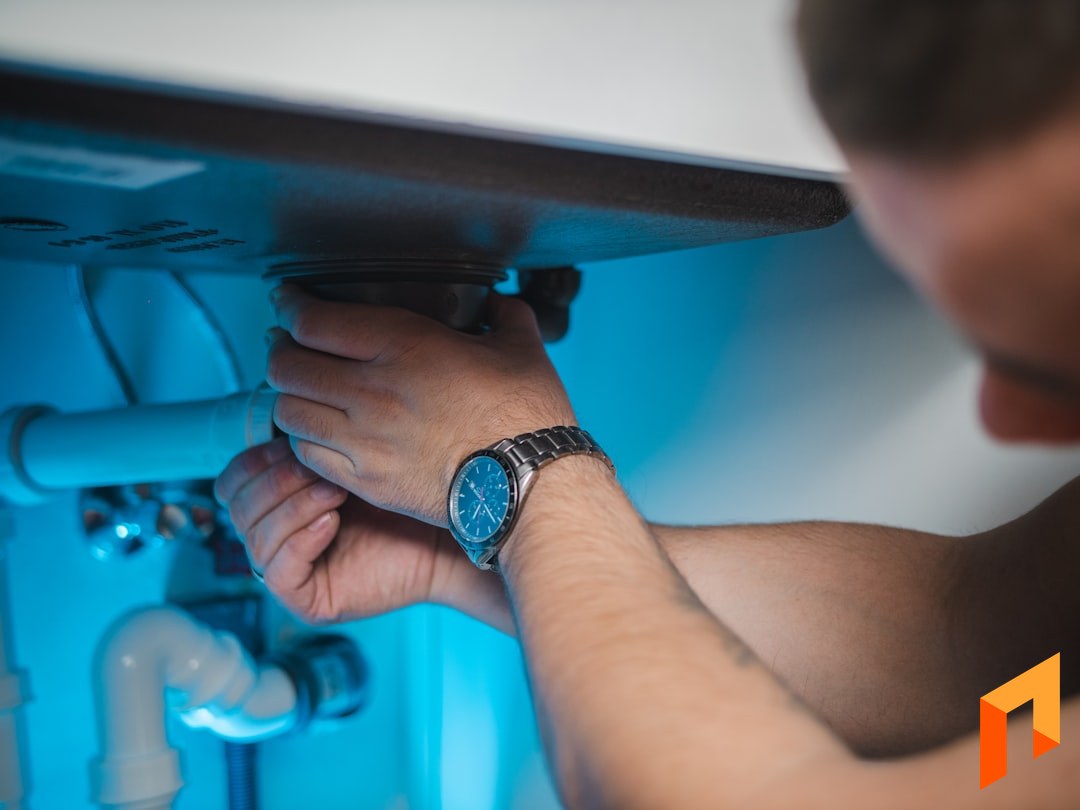
You can rough in a house, clear a main line, and pass inspection without breaking a sweat. That's the hard-won part, and you already own it. What turns a licensed plumber into a business owner is everything around the wrench: forming a legal entity, carrying the right insurance, pricing so you actually keep money, and building a steady stream of customers who call you first.
This guide walks that whole path, from picking a niche to running your first projects like a pro. Practical steps only, nothing you can't act on this week.
Note
TL;DR: To start a plumbing business, pick a niche, form an LLC and get an EIN, secure the plumbing license your state requires, buy liability and workers' comp insurance plus any bond, line up tools and supplier accounts, and price with real markup. Then win your first customers through local SEO, referrals, and fast emergency service.
What are the first steps to starting a plumbing business?
The first steps are choosing your niche, forming a legal entity, and getting properly licensed and insured before you take on paid work. Plumbing is a licensed trade in most states, and working without the right credential can mean fines, voided insurance, and personal liability. Here's the sequence most successful plumbing companies follow:
- Pick a niche and write a lean business plan.
- Register the business (usually an LLC) and get an EIN.
- Hold the plumbing license your state requires.
- Buy insurance and, if required, a surety bond.
- Set up tools, a vehicle, and supplier accounts.
- Price the work with real markup.
- Land your first customers and deliver professionally.
Work them in order. Each step unlocks the next.
Step 1: Choose your plumbing niche
Pick what you want to be known for before you try to be everything. A defined niche makes marketing cheaper, referrals clearer, and pricing far easier, because you repeat similar work and learn what it truly costs. The three main lanes in plumbing:
- Service and repair. Leaks, clogs, water heaters, fixture swaps, and emergency calls for homeowners. Fast cash flow, high call volume, strong repeat business, and the lowest-barrier way to start.
- New construction. Rough-in and finish plumbing for builders and GCs on new homes and additions. Larger projects, but you're bidding against other plumbers and waiting on longer builder payment cycles.
- Commercial. Restaurants, offices, retail, and light industrial. Higher revenue and steadier contracts, but more code complexity, more inspections, and often prevailing-wage or bonding requirements.
You don't have to stay in one lane forever, and plenty of companies start with residential service calls and grow into commercial accounts. But start focused. A plumber who does "everything" competes on price with everyone; a plumber known for same-day water heater replacements gets called by name.
Step 2: Write a plumbing business plan
A plumbing business plan is a short document that defines what you do, who you serve, what it costs to operate, and how you'll win work. It doesn't need to be 40 pages, just a few that answer the questions you'll actually face in month one. Cover these sections:
- Services and niche: the work you do and who you do it for.
- Market: your local demand, competitors, and how you'll stand out.
- Pricing model: your target markup, flat-rate vs. hourly, and how you'll estimate.
- Operations: solo vs. crew, your vehicle, tools, software, and dispatch.
- Financial plan: startup costs, a cash cushion, and a break-even target.
- Growth: how you get from your first call to a full schedule.
For a broader look at fundamentals that apply to any trade, our guide on how to start a construction business covers the entity, insurance, and pricing decisions in more depth.
Step 3: Set up the legal side (LLC, EIN, licensing)
Get the legal foundation right before you invoice a single customer. Three pieces matter.
Form an LLC
Most new plumbing businesses register as a limited liability company (LLC), which separates your personal assets from the business. That matters in a trade where a burst supply line or flooded basement can turn into a claim. Registration is at the state level and usually cheap and quick. (This is general information, not legal advice, so confirm your setup with an accountant or attorney.)
Get an EIN
An EIN (Employer Identification Number) is your business's federal tax ID. It's free from the IRS, takes minutes online, and you'll need it to open a business bank account, set up supplier credit, and hire employees. Get it right after your LLC.
Get your plumbing license
Here's the part that trips up new owners: plumbing is a state-regulated licensed trade in most states, and requirements vary widely. Plumbers typically move up a tiered ladder:
- Apprentice — you work under a licensed plumber and log supervised hours.
- Journeyman — after enough hours and passing an exam, you can work independently.
- Master — the top tier, often required to pull permits, run a plumbing business, or supervise others.
Many states require a master plumber license (or a master on staff) to run a plumbing company and pull permits, plus a separate contractor registration. Some states license at the state level, others by city or county, and a handful regulate lightly. Exam requirements, experience hours, and continuing education all vary.
Do not guess here. Check your state's licensing board for the exact tier, hours, and exams you need. Our guide on how to get a contractor license covers how trade licensing works and how to verify your state's requirements.
Step 4: Get insured and bonded
In plumbing, water-damage claims are common and expensive, so insurance is not the place to cut corners. Typical coverage:
- General liability covers the property-damage and workmanship claims central to plumbing.
- Workers' compensation is required in most states the moment you hire employees.
- Commercial auto covers your service vehicle and tools on the road.
- A surety bond is required by many licensing jurisdictions and by many builders and commercial clients before they let you on site.
Many builders and property managers won't hire a plumber who can't show a certificate of insurance and a bond. Having both ready makes you the easy yes.
Step 5: Line up tools, a vehicle, and startup costs
Your startup budget depends heavily on your niche. A solo service plumber with an existing truck needs far less than someone buying a new van and stocking commercial inventory. Rather than trust a single online number, budget across these categories:
- Service vehicle. A van or truck (used, new, or one you already own) is often the single largest startup cost.
- Tools. Add the specialty gear your niche demands to your hand tools: drain machines, cameras, press tools, and testing equipment.
- Inventory and stock. Common fixtures, fittings, valves, and pipe so you can finish a call without a supply-house run.
- Licensing and insurance. Exam and license fees, your first insurance premiums, and the bond.
- Software and admin. Your estimating and project tools, accounting, and a phone number customers can reach.
- Cash cushion. A few months of runway while your pipeline fills, the reserve most new owners underestimate.
Price each category against your actual local market. A service-and-repair start-up runs lean; a commercial or new-construction operation carries much more upfront.
Note
Book a demo to start your 30-day free trial. Build your first plumbing estimate, apply your markup, and send a proposal a customer can approve online in under 30 minutes. Book a demo.
Step 6: Open supplier accounts
Your supply houses shape your margins and your speed. Once your LLC and EIN are set, open trade accounts with your local plumbing wholesalers and one or two national suppliers.
Trade accounts get you contractor pricing instead of retail, net terms (often net-30) that ease cash flow, and a counter rep who can source odd parts fast. Apply early, so you're never stuck fronting cash for a big order mid-project.
Step 7: Price the work with real markup
This is where new plumbing businesses quietly bleed money. You have to charge enough to cover not just materials and labor, but overhead, your truck, insurance, and profit. Charging cost-plus-a-little is how skilled plumbers earn less than their apprentices. Two decisions matter most:
- Flat-rate vs. hourly. Most successful service plumbers price flat-rate (a set price per task). Customers prefer knowing the price upfront, and you're rewarded for being fast instead of penalized.
- Your markup. The percentage you add on top of direct costs to cover overhead and profit. Get it right and every project funds the business; get it wrong and volume just multiplies your losses.
Markup and margin are not the same number, and confusing them is a common way trade businesses underprice. Our construction markup and pricing guide breaks down typical ranges and how to price from your costs. Whatever markup you land on, apply it consistently, which is easier when your pricing lives in one place instead of scattered spreadsheets, exactly what Foreman's budget and estimating tools are built for.
Step 8: Get your first customers
Early on, your job is to become the plumber people can find and trust fast. Focus on channels that convert quickly:
- Local SEO and a Google Business Profile. When someone searches "plumber near me" or "water heater repair [your city]," you want to show up. Claim your Google Business Profile, gather reviews from every happy customer, and keep your service area and phone number correct everywhere.
- Referrals. Ask every satisfied customer for a review and a referral. In plumbing, a burst pipe at midnight becomes a lifelong customer if you answer, and their neighbor calls you next.
- Emergency and same-day service. Being the plumber who actually picks up and shows up is a real advantage. Emergency calls are urgent, less price-sensitive, and a fast track to reviews.
- Builder, GC, and property-manager relationships. For new-construction work, reliable plumbers who hit schedule and pass inspection get called back. And one good property-management account, with its dozens of units, can fill a big chunk of your schedule.
Answer the phone, show up when you say you will, and leave the site clean. In this trade, reputation is the marketing.
Step 9: Run your projects professionally
The plumbers who grow aren't always the best in the field, they're the ones who run the business well. Clear estimates, signed approvals, and staged invoices separate a company from a guy with a truck:
- Every project starts with a written estimate the customer approves before you turn a valve.
- Change orders get documented and approved, not handled with a handshake you'll argue about later.
- Invoices go out on time, and your costs, schedule, and communication live in one place instead of your truck's glovebox and three text threads.
Run every plumbing project on clear estimates, signed approvals, and staged invoices — build your first one free in Foreman.
Book a demoThe bottom line
Starting a plumbing business comes down to the unglamorous work around the trade you've already mastered: form the entity, get the license your state requires, carry real insurance, price with proper markup, and build a reputation for showing up. Do those in order and you'll have a business, not just a busy phone.
The fastest next step is to price a real project the professional way. Build your first plumbing estimate free in Foreman and send a proposal your customer can approve online.


