

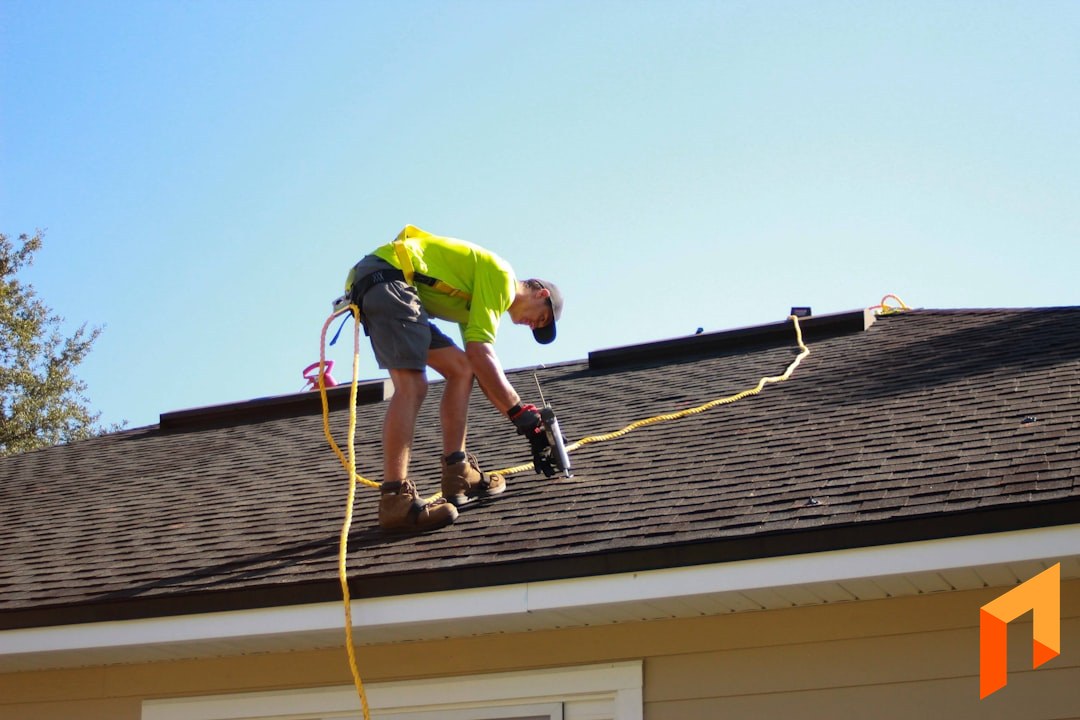
Roofing is one of the most reliable trades to build a business around. Every building needs a roof, roofs wear out on a predictable schedule, and storm season creates steady demand for repairs and replacements. If you already know how to tear off, dry in, and install, you have the hard part. The rest is turning that skill into a company that stays licensed, insured, and profitable.
This guide walks the full path to start a roofing business, from picking your niche to landing your first projects and running them like a professional. No fluff, no theory you can't use this week.
Note
TL;DR: To start a roofing company, choose a niche (residential vs. commercial, repair vs. replacement, insurance/storm work), write a lean roofing business plan, register an LLC and get your EIN, secure any required roofing or specialty license, buy general liability and workers' comp insurance, line up tools and startup cash, set pricing with real markup, and land your first roofs through referrals, local marketing, and insurance-claim work.
What are the first steps to starting a roofing business?
The first steps are choosing a niche, forming a legal entity, and getting licensed and insured before you take on paid work. Roofing carries more risk than most trades because crews work at height and a bad install can cause water damage for years. Skipping the legal and insurance groundwork is how new roofers end up personally liable for an injury or a leak claim.
Here is the sequence most successful roofers follow:
- Pick a roofing niche and target customer.
- Write a short roofing business plan.
- Register the business (usually an LLC) and get an EIN.
- Get any required roofing or specialty license.
- Buy insurance — general liability and workers' comp.
- Buy tools, line up supplier accounts, and set pricing.
- Land your first projects and deliver them professionally.
Work them in order. Each step unlocks the next.
Step 1: Choose your roofing niche
Pick one lane to be known for before you try to cover every roof in town. A defined niche makes marketing cheaper, referrals clearer, and pricing easier because you repeat the same kind of project and learn what it truly costs.
Residential vs. commercial
Residential roofing means houses and small multi-family buildings — mostly asphalt shingle, with some metal, tile, and cedar. Projects are shorter, the sales cycle is faster, and you deal directly with homeowners. It is the most common starting point because the barrier to entry is lower and the work is steady.
Commercial roofing means flat and low-slope systems — TPO, EPDM, modified bitumen — on stores, warehouses, and offices. Projects are bigger and more lucrative, but they demand specialized crews, more equipment, and a longer bidding process with property managers and general contractors. Many roofers start residential and move into commercial once they have crews and cash flow.
Repair vs. replacement
Repairs are small, fast, and high-margin, and they are a great way to build a reputation and a referral base early. Full replacements are larger tickets that carry the business. Most successful roofers do both: repairs keep the phone ringing and cash coming in between the bigger replacement projects.
Insurance and storm work
A large share of roofing revenue comes from insurance claims after hail, wind, and storm damage. This work can be extremely profitable, but it requires you to understand the claims process, document damage properly, and work cleanly with adjusters and homeowners. Storm-chasing crews come and go; the roofers who build a lasting business treat claim work as one channel among several, not the whole company.
Step 2: Write a roofing business plan
You don't need a 40-page document. You need a clear roofing business plan that answers a handful of questions honestly:
- What do you sell? Your niche, service area, and the systems you install.
- Who buys it? Homeowners, property managers, general contractors, or insurance claimants.
- What does a project cost you? Materials, labor, disposal, permits, and overhead.
- What will you charge? Your pricing and markup (more on this below).
- How will customers find you? Referrals, local marketing, and claim work.
- How much cash do you need to start and survive the first slow months?
Keep it to a few pages you actually revisit. A plan that lives in a drawer is worthless; one you update as you learn what your projects really cost is a working tool.
For a broader look at the fundamentals that apply to any trade, see our guide on how to start a construction business.
Step 3: Register your business and get an EIN
Most new roofers form an LLC. It separates your personal assets from the business, which matters a great deal in a trade where injuries and property damage are real risks. Registration is a state-level filing and the cost is modest and varies by state.
Once the entity is formed, get an EIN (Employer Identification Number) from the IRS. It is free, takes a few minutes online, and you will need it to open a business bank account, hire crew, and set up supplier accounts. Keep your business and personal finances completely separate from day one — it makes taxes, bookkeeping, and eventual growth far easier.
This is general information, not legal or tax advice. A short conversation with an accountant or attorney in your state is worth it before you file.
Step 4: Get licensed
Here is where roofers trip up: many states require a roofing or specialty contractor license, and the requirements vary widely from one state to the next. Some states license roofing specifically, some fold it under a general contractor license, some regulate it at the city or county level, and a few have no statewide requirement at all. Thresholds — like the project dollar amount that triggers a license — also differ.
Working unlicensed where a license is required can void your contracts, block you from pulling permits, and expose you to fines. Before you take a paid roof, confirm exactly what your state and locality require.
Our contractor licensing guide walks through how licensing works, what exams and experience are typically involved, and how to find your state's specific rules.
Run every roofing project on one platform — estimates, proposals clients sign online, and job costs that stay on budget.
Book a demoStep 5: Get insured and bonded
Insurance is not optional in roofing — it is what keeps one bad day from ending your business.
- General liability insurance covers property damage and third-party injury. If a tear-off leaves a roof exposed and it rains, or a dropped bundle damages a customer's car, this is what protects you. Most homeowners, GCs, and property managers won't hire an uninsured roofer.
- Workers' compensation insurance covers your crew if someone is hurt on the job. Because roofers work at height, this coverage is essential and is legally required in most states once you have employees. Falls are the leading cause of injury in the trade, and premiums reflect that — budget for it.
- A surety bond may be required to get or keep your license in some states, and it reassures customers that the work will be completed as promised.
Requirements and costs vary by state, by your crew size, and by the systems you install. Get quotes from an agent who understands roofing specifically — general small-business policies often don't price the height risk correctly.
Step 6: Buy your tools and equipment
You don't need to buy everything at once. Start with what your first projects actually require and reinvest as revenue comes in. A typical residential roofing startup builds up:
- Safety gear — harnesses, ropes, anchors, and hard hats. This is non-negotiable and comes first.
- Ladders and roof jacks for access and footing.
- Nail guns, compressors, and hand tools — hammers, pry bars, utility knives, chalk lines, tin snips.
- Tear-off tools — roofing shovels, magnetic sweepers for nail cleanup.
- A truck or trailer to haul materials, tools, and debris.
- Dumpster or disposal arrangements for tear-off waste.
Actual roofing business startup costs depend heavily on your niche, whether you buy or lease vehicles, and how much you buy used versus new. Rather than trust a single number you read online, price out your specific list from real suppliers in your area. Buying quality safety and cutting tools up front pays off — cheap gear fails when it matters most.
Step 7: Set up supplier accounts
Your relationship with suppliers directly affects your margins. Open accounts with roofing distributors and manufacturer-authorized suppliers in your area. As you build a track record, you can negotiate:
- Contractor pricing below retail on shingles, underlayment, flashing, and fasteners.
- Net terms (paying 30 days out) so you aren't fronting all material costs on every project.
- Delivery and rooftop loading, which saves your crew hours of hauling.
Manufacturer relationships also open the door to certifications — becoming a certified installer for a shingle or membrane brand lets you offer extended warranties, which is a real selling point with homeowners comparing bids.
Step 8: Price your projects with real markup
This is where roofing businesses quietly win or lose. Knowing your material and labor cost is only half the equation. To actually profit, you apply markup on top of your costs to cover overhead — insurance, your truck, fuel, tools, office time — and leave a real margin.
A common mistake is confusing markup with margin, or picking a percentage out of thin air. If you mark up too little, you work all season and end up with nothing after overhead. If you don't account for waste, disposal, and steep-slope labor, your bids won't hold.
Build your estimates from real numbers: squares of material, waste factor, labor hours, tear-off, disposal, permits, and then your markup. Our construction markup and pricing guide breaks down exactly how to set a markup that keeps you profitable.
Note
Book a demo to start your 30-day free trial. Build your first roofing estimate, apply your markup, and send a proposal a homeowner can sign online in under 30 minutes. Book a demo.
Step 9: Land your first roofing customers
You can be the best roofer in the county and still go broke if the phone doesn't ring. Early on, focus on channels that cost little but time:
- Referrals. Do clean, on-time work and ask every happy customer for a referral and a review. Word of mouth is the strongest channel in roofing.
- Local marketing. A simple website, a Google Business Profile, yard signs, and truck wraps put you in front of neighbors — and roofing is a neighborhood-driven purchase. When one house gets a new roof, the ones next door notice.
- Insurance-claim work. After storms, homeowners need help navigating claims. Roofers who document damage well and work professionally with adjusters build a steady pipeline.
- General contractor and property manager relationships. Reliable subs are always in demand. One good GC relationship can keep a crew busy.
Pick two or three channels and work them consistently rather than dabbling in all of them.
Step 10: Run your projects professionally
The difference between a roofer who stays busy and one who burns out is rarely skill — it's operations. Homeowners remember whether you showed up when you said, whether the bid matched the invoice, and whether the site was left clean.
Run every project on the same simple backbone:
- A clear, itemized estimate built from real costs and markup.
- A signed proposal so scope and price are agreed before work starts.
- Staged invoices — deposit, progress, and final — so cash flows in as work progresses.
- Documented change orders whenever the scope shifts (extra decking, a second layer discovered at tear-off), so surprises don't come out of your margin.
Doing this on paper and spreadsheets works until you have more than a couple of projects running at once. This is where a platform like Foreman helps — you build the estimate, turn it into a proposal the customer signs online, invoice against it, and track costs so you can see your real budget on every roof. One place for the paperwork means you spend your day on roofs, not chasing documents.
Start your roofing business on the right foot — estimates, proposals, and job costs in one place, free to try.
Book a demoThe bottom line
Starting a roofing business comes down to a clear sequence: pick your niche, set up the legal and insurance foundation, get licensed where it's required, buy the right tools, price with real markup, and land your first projects through referrals and claim work. The trade rewards roofers who are professional off the roof as much as on it.
Get the foundation right, run each project cleanly, and let good work compound into referrals. That's how a one-crew operation becomes a company. Your next step is simple: build your first roofing estimate free in Foreman and send a proposal today.


